
Cracks in the Wall: When It's Cosmetic and When It's Structural
Almost every house we inspect has a crack somewhere. Doesn't matter if it's a weatherboard beach house in Blairgowrie or a brick veneer in Brighton East. Cracks are part of how buildings age. Most of them are nothing to worry about. Some of them are exactly the reason you get a building inspection before you buy. Knowing the difference is what this article's about.
The Cracks We See in Almost Every House
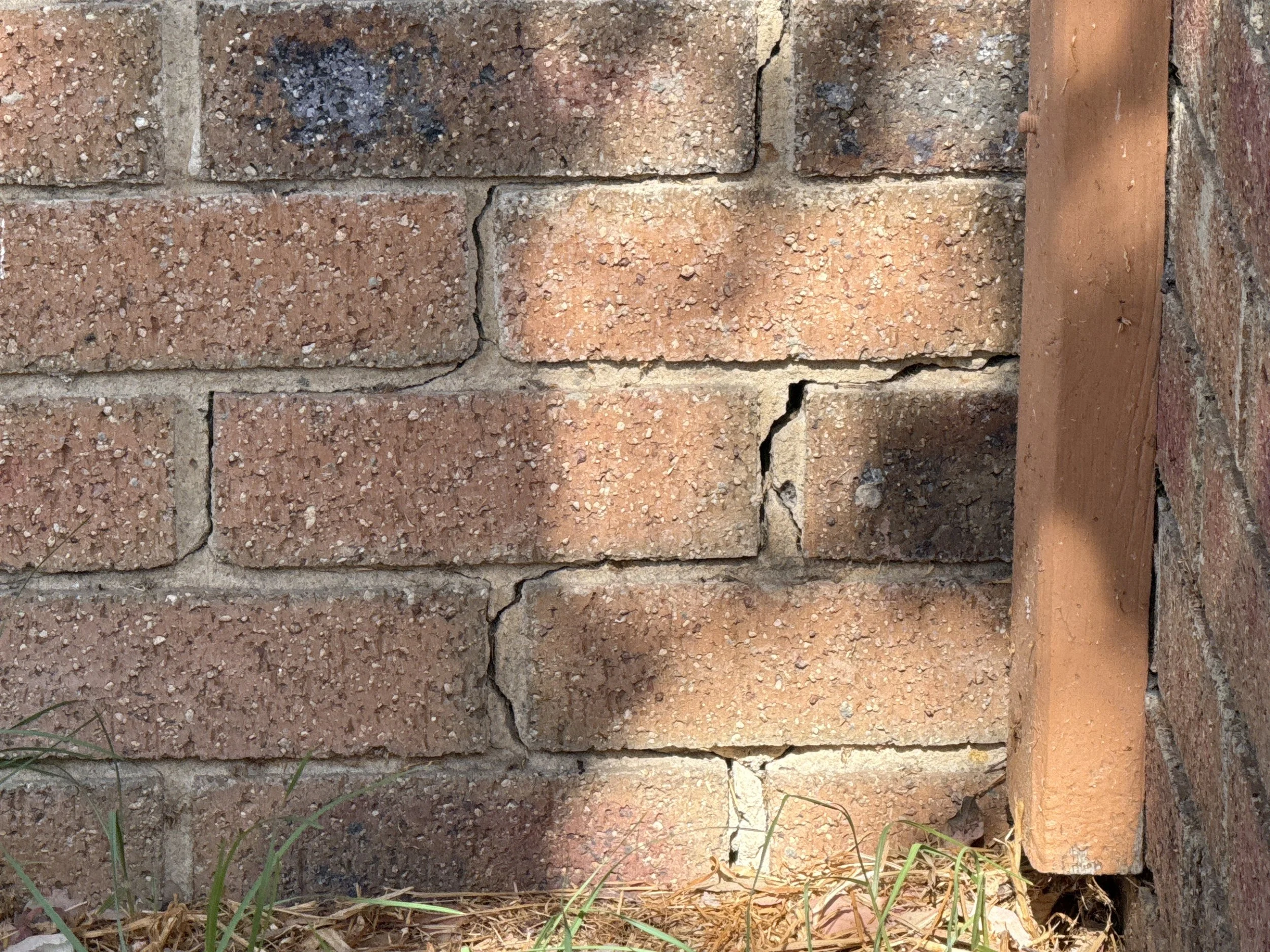
Hairline cracking is genuinely one of the most common things we log in our reports, full stop. It shows up in render, in cornices, around door frames, along mortar joints. Most houses move a little with the seasons: clay soils around bayside Melbourne expand and contract as they wet and dry, timber frames shrink slightly over decades, and old crack repairs sometimes reopen along the same line. None of that is a red flag by itself. In the vast majority of cases we simply note it, photograph it, and recommend the owner keep an eye on it, specifically whether the crack widens, lengthens, or new ones start appearing near it. That's a sensible, honest recommendation, not us hedging our bets.
When a Crack Stops Being "Just Monitor It"
In a genuine minority of the bayside and Peninsula inspections we do, cracking is serious enough that we log it as a Major Defect: meaning it's significant enough that it could affect the structural integrity of the building, or lead to further degradation, and it needs a suitably qualified person, usually a structural engineer, to assess it before you rely on our general recommendation alone. Here's what that actually looks like on site.
Step Cracking Through Brickwork
This is the one every building inspector takes seriously. Step cracking follows the mortar joints in a zig-zag pattern up through a brick wall, rather than running in one straight vertical line. We've seen it run through a property alongside render cracking on the same wall line, which tells us the movement isn't isolated to one spot. It's tracking through the structure. That combination is a strong reason to get an engineer out before exchange, not after.
Vertical and Diagonal Cracking in Front Walls
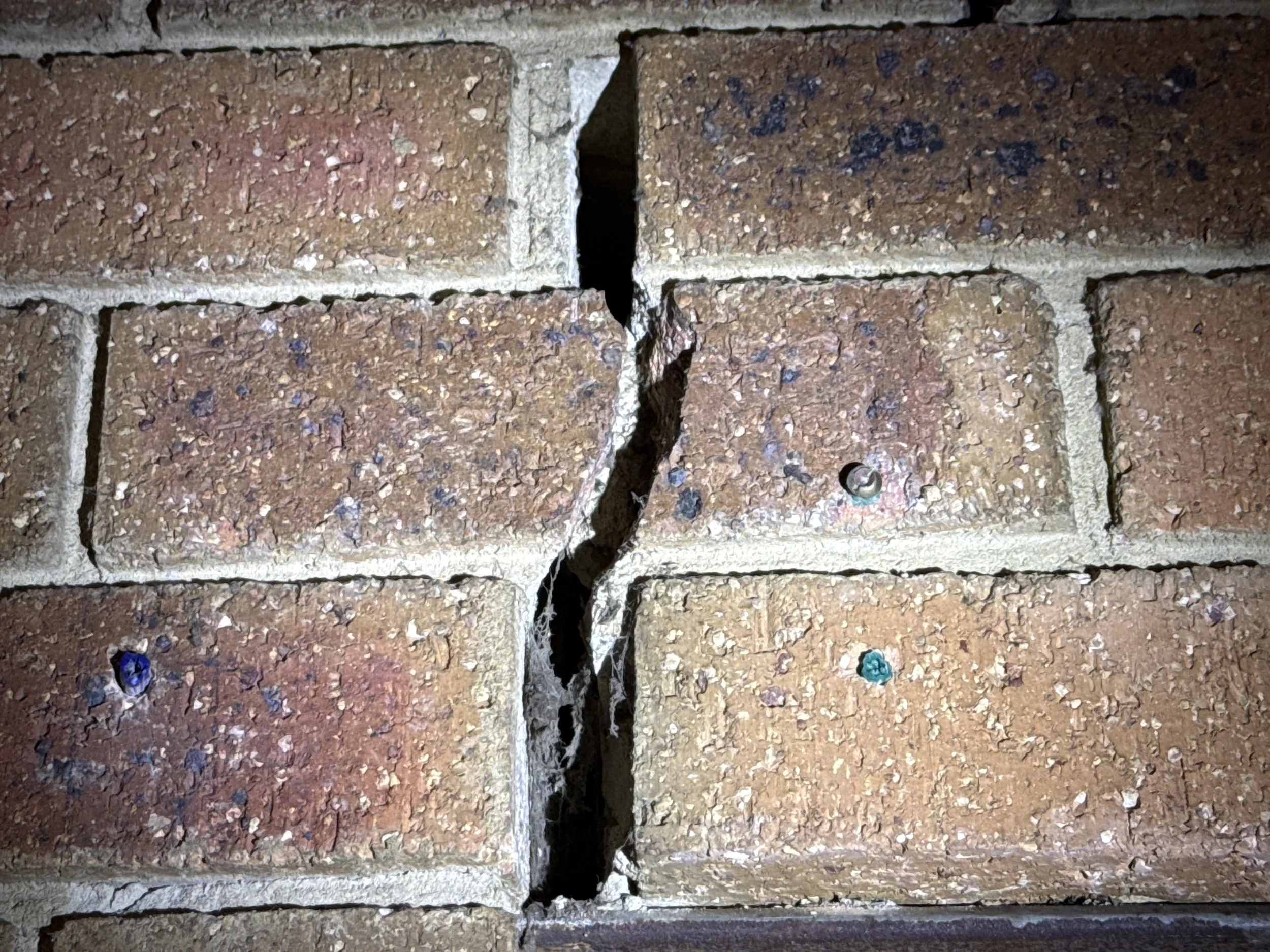
We've inspected bayside homes with significant vertical and diagonal cracking across the front brick wall: the kind of cracking pattern that can point to foundational movement rather than surface-level shrinkage. A single small diagonal hairline near a window corner is usually nothing. Wide, continuous diagonal cracking running through multiple courses of brick, especially paired with cracking elsewhere on the same elevation, is a different conversation entirely.
Wall Subsidence and Alignment Shifts
Sometimes the crack is the smaller clue and the bigger tell is what's happening around it. We've flagged properties with visible wall subsidence (where you can see the wall itself is no longer sitting straight, with a genuine shift in alignment) and recommended an underpinning assessment. Distorted brickwork with old mortar repairs patched over the top is another version of the same story: someone's tried to fix the symptom before, and the underlying movement is still there.
How We Tell the Difference on the Day
We're looking at width, direction, pattern and context, not just "is there a crack." A fine, straight hairline crack in render, consistent in width top to bottom, with no distortion in the surrounding brickwork, is almost always cosmetic movement. A crack that's wider at one end than the other, that steps through mortar joints, that lines up with cracking on an internal wall in the same location, or that sits near visible distortion or misalignment in the wall itself: that's when we start talking about structural cracking rather than cosmetic. We also check whether it's fresh or old. New crack repair paint over an active step crack is a common thing to spot, and it's a reason to ask the seller directly what caused it and when it was patched.
What Happens After We Call It a Major Defect
If we log cracking as a Major Defect under AS 4349.1-2007, our report says so clearly and recommends further assessment by a structural engineer before you proceed. That's not us being overly cautious to cover ourselves. It's because a building inspection gives you a visual, non-invasive assessment on the day. We can tell you what we see and what it's consistent with. We can't tell you definitively what's happening below ground or what it'll cost to fix. An engineer's structural assessment is the next step, and it's a lot cheaper to organise before you've bought the house than after.
Don't Guess: Get It Checked Before You Sign
If you're already under contract or about to make an offer on a place with visible cracking, don't take the agent's word that "it's just old house settling." Sometimes that's true. Sometimes it isn't. The only way to know is to have someone independent actually look at it, measure it, and put it in writing. That's true whether you're buying in Middle Park, Hastings, or anywhere else in bayside Melbourne. Building inspections Melbourne buyers rely on should always spell out clearly which cracks need watching and which ones need an engineer, not leave you guessing.
Book Your Pre-Purchase Inspection With Littlefire
We check every crack we find against AS 4349.1-2007 and call it plainly: cosmetic and worth monitoring, or Major Defect and worth pausing for. Darren Lever is a VBA-registered building practitioner and every report comes back photo-rich and in plain English, so you're not left decoding jargon before an auction. Book your pre-purchase building inspection with Littlefire at www.littlefire.com.au before you sign anything.